
Recreational vehicles (RVs) provide the comfort and convenience of a home away from home, allowing travelers to explore the great outdoors while maintaining modern amenities.
A crucial component of this self-contained lifestyle is the RV water tanks, which store fresh water for drinking, cooking, and hygiene purposes and also collect wastewater from sinks, showers, and toilets, ensuring proper waste management during the RV camping experience.
RV water tanks play a vital role in the overall experience and convenience of RV camping. By having a suitable water tank installed in the vehicle, adventurers can ensure a clean, reliable water supply for their everyday needs, contributing to a comfortable, sanitary, and worry-free trip. In this guide, we’ll be discussing everything you need to know about your water tank and how to properly maintain it.

Understanding Your RV Water Tanks
RV water tanks deliver clean, potable water to your recreational vehicle’s sinks, showers, and toilets. They come in various sizes and are designed to store different types of water, including fresh, gray, and black water. This section will provide a clear, knowledgeable overview of each type of RV water tank, helping you to understand their functionality and importance.
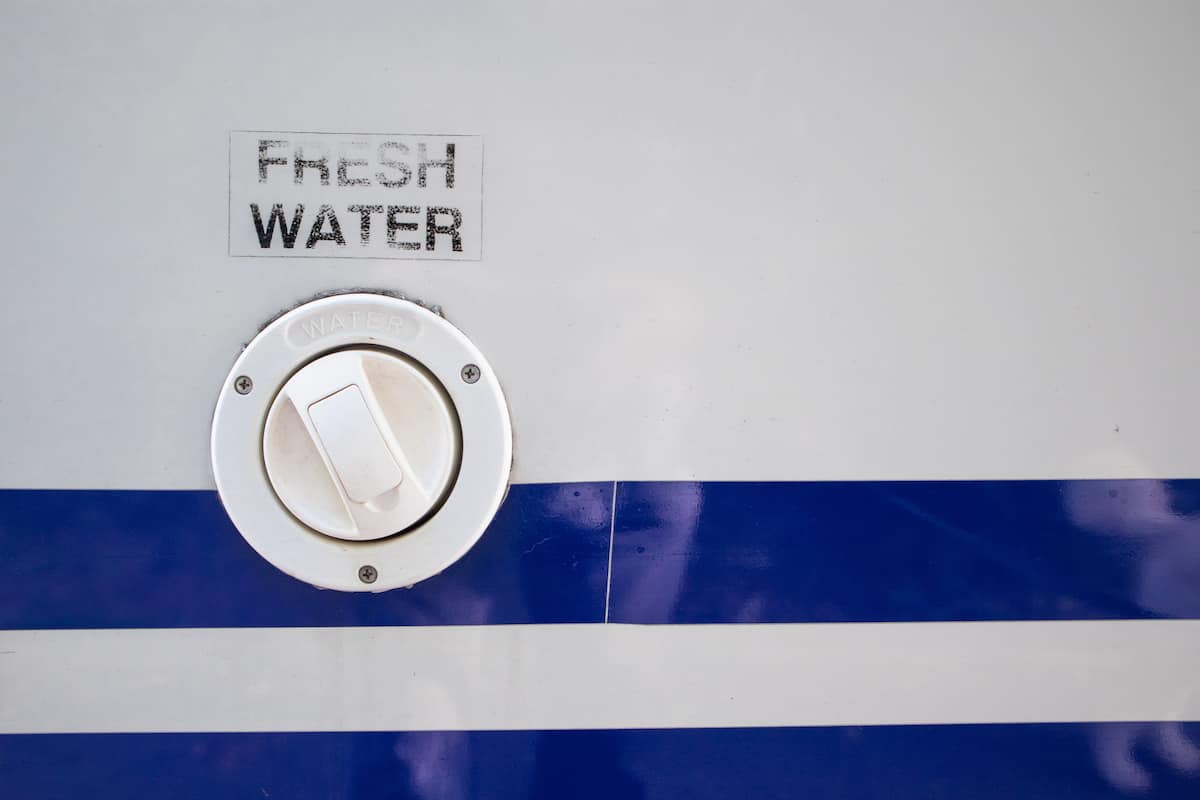
Fresh Water
The fresh water tank holds potable water that can be used for drinking, cooking, and washing. Its capacity varies depending on the size and layout of the RV, ranging from 20 to 100 gallons.
It is important to ensure that the plastic used in a new RV fresh water tank is BPA-free, as this prevents the release of harmful chemicals. You may also want to consider using a water filter along with your fresh water tank.
Fresh water tanks are used to store clean water for drinking and other purposes inside the RV. The capacity of these tanks can range from as low as 3 gallons to as high as 100 gallons. Smaller tanks, with capacities between 5 and 10 gallons, are commonly found in compact RVs, while larger tanks, holding around 50 gallons or more, are often installed in bigger motorhomes. For most RVs, fresh water tanks typically hold between 20 and 40 gallons.
Gray Water
Gray water tanks store wastewater from sinks and showers after it has been used. As the water enters the tank, it will remain there until it is ready to be dumped by the user at a designated sewer dump. Dumping gray water on the ground is not recommended, as it can harm the environment.
While the exact capacity of gray water tanks can also vary greatly, they generally hold between 40 to 50 gallons. However, some smaller RVs may have gray water tanks with capacities as low as 7 or 9 gallons.
Black Water
Black water tanks contain waste from toilets, which must be emptied and cleaned regularly to maintain hygiene standards. These tanks are specially designed to allow waste to move easily toward the termination point when being emptied. As with gray water tanks, black water should be dumped at designated sewer dumps and never on the ground.
The capacity of black water tanks can range between 18 and 64 gallons, depending on the size of the RV. Tanks with a smaller capacity, like 11 or 12 gallons, may be found in smaller travel trailers, while a 30-gallon tank would be more common in a larger motorhome.
Holding tanks come equipped with sensors and a wire harness connected to a monitor panel inside the RV. This feature allows you to keep track of water levels and respond accordingly to prevent overflowing or running out of water during your journey.
Proper care and maintenance of RV water tanks will ensure that your vehicle runs smoothly and hygienically. Regularly sanitizing and cleaning the fresh water tank, in addition to draining and emptying the gray and black water tanks, is crucial for avoiding unpleasant odors and maintaining a healthy environment inside your RV.
Maintaining Your RV Water Tanks
Proper care and maintenance of these tanks prevent odors, clogs, and the growth of bacteria. This section will cover the essential aspects of maintaining RV water tanks, focusing on the pump, valves, and the use of cleaning solutions.
Taking care of the water pump is vital as it controls the water flow in the RV. Be sure to regularly inspect and clean the water pump, checking for any leaks or signs of wear and tear. If necessary, replace any damaged parts promptly to maintain optimal function. Additionally, do not let the pump run dry, and consider investing in a pump strainer to prevent debris from causing damage.
Efficiently managing water flow and preventing leaks depends on well-maintained valves. Make it a habit to regularly lubricate the valves with a non-petroleum-based product, ensuring smooth operation and minimizing the risk of leaks. Valves should also be inspected for any signs of damage or corrosion, with worn or damaged valves replaced as needed.
To keep your RV water tanks clean and safe for use, they should be sanitized regularly. Using a chlorine-based solution is recommended for this purpose. A common approach is to mix one-fourth of a cup of household bleach with a gallon of water. Add this solution to the fresh water tank, filling it to capacity. Then, turn on the pump to distribute the solution throughout the system, allowing it to sit for several hours. Afterward, drain the tank and flush the system with fresh water until the smell of bleach is gone. This process should be completed at least once per season or before storing the RV for an extended period.
By following these tips regarding the pump, valves, and cleaning solutions, RV owners can confidently maintain their water tanks for a fresh, clean, and enjoyable camping experience.
RV Water Tanks Buying Considerations
In this section, we will compare various types of RV water tanks and outline the factors you should consider when selecting the best option.
Materials and Types: RV water tanks are typically made from two primary materials: plastic and stainless steel. Plastic tanks are lightweight and less expensive. One notable manufacturer of plastic RV water tanks is Ronco Plastics, known for its high-quality, durable products. Stainless steel tanks, on the other hand, offer more durability, corrosion resistance, and longer life expectancy. However, they are heavier and more expensive than their plastic counterparts.
Size and Capacity: The size of the tank you choose will be mainly determined by your RV’s size and your water consumption needs. Smaller RVs typically have smaller tanks, whereas larger RVs may need tanks with capacities of up to 100 gallons or more. Be sure to consult with experts in the field or the owners’ manual for your RV to determine the proper size tank.
Installation and Maintenance: Proper installation and ongoing maintenance are essential for the smooth operation of your RV’s water system. The installation process may vary depending on the type of tank you select, with some requiring professional installation. Regardless of the tank you choose, regular maintenance is vital, including periodic inspection and cleaning using a diluted bleach solution to ensure a safe and sanitary water supply.
Price: When it comes to pricing, plastic RV water tanks are generally more budget-friendly than stainless steel options. While you may pay more upfront for a stainless steel model, it may prove to be a worthwhile investment in the long run due to its increased durability and resistance to damage. Regardless of the material, it’s essential to keep in mind that the size and any additional features may also impact the cost.
Selecting the best RV water tank for your needs should take into consideration factors such as material, size, installation, maintenance, and price. Weighing the benefits and drawbacks of each option in light of your specific requirements can ensure that you choose a tank that best suits your RV and your personal preferences.

Frequently Asked Questions
How do I choose the right size water tank for my RV?
When choosing the right size water tank for your RV, consider factors such as the duration of your trips, the number of occupants, and your water usage habits. Longer trips and a higher number of occupants typically require larger tanks. Also, identify how much water you consume for activities like cooking, showering, and cleaning. Remember that larger tanks add weight to your RV, so balance your water supply needs with your RV’s weight capacity.
How long can water be safely stored in an RV tank?
Water can be safely stored in an RV tank for about two weeks. To ensure water quality, it’s recommended to drain, clean, and refill the tank if you don’t use the stored water within this period. Regularly treating the water with purification tablets or bleach can help prolong the water’s storage lifespan and prevent bacterial growth.
How long does a 50-gallon water tank typically last?
A 50-gallon water tank’s duration depends on the water usage of the occupants. For example, if the average person uses around 15-20 gallons of water per day for drinking, cooking, and hygiene, a 50-gallon water tank could last 2-3 days for two people. Adjust accordingly for the number of occupants and individual water usage habits.
What are the benefits of using a portable fresh water tank?
Portable fresh water tanks provide several benefits, including increased water storage capacity, flexibility in managing water resources, and convenience during trips. They can be easily refilled at water sources and are relatively easy to handle when empty. A portable water tank can also serve as a backup water source for extended trips or when the main water tank runs low.
Do I need a pump for my RV’s portable water tank?
Yes, a pump is necessary for transferring water from a portable water tank to your RV’s main freshwater system. Some portable tanks come with built-in pumps, while others require a separate pump. Select a pump that is compatible with your portable tank and supplies a sufficient flow rate to meet your water usage needs.
Are there any specific maintenance or cleaning requirements for RV water tanks?
Regular maintenance and cleaning of RV water tanks are crucial to preventing bacterial growth and ensuring a safe water supply. Inspect the tanks and piping regularly for leaks or damage. To clean your freshwater tank, periodically drain all water, mix a water and bleach solution, and fill the tank with it. Let it sit for several hours, drain, and refill the tank with freshwater. For waste holding tanks, drain and rinse them regularly, and use appropriate treatments to break down waste and control odors.
Wrapping Up
RVs allow campers to explore the great outdoors while also having some of the comforts and conveniences of home. But a big part of owning or using an RV is making sure that it’s properly maintained–and that includes the water tanks!
The RV water tanks ensure that campers have access to clean water and also keep your trip sanitary and worry-free! We hope this guide has been helpful in walking you through everything you need to know about your tanks and how to take care of them!
For more information on how to make your next RV trip a success, check out the post on the Ultimate RV Packing list!
- About the Author
- Latest Posts

Hey there, I’m Ryan, the face behind Beyond The Tent.
With decades of camping experiences, my journey into the wilderness began on the rustic trails of a farm in southern Minnesota, where my childhood was filled with explorations and camping by a picturesque river.
My family’s adventures across the United States, from the majestic Colorado mountains to the serene national parks and the pristine Boundary Waters Canoe Area of Northern Minnesota have given me a broad perspective. With each journey, whether in state parks or private encampments, and through the homely comfort of our camping trailers, we’ve amassed a trove of stories, experiences, and invaluable camping wisdom.